

Many people write off a sore jaw or dull morning headache as the result of a bad sleep. But your jaw might actually be working overtime all night long.
Teeth grinding, also called bruxism, is a sleep movement disorder where you clench or grind your teeth without realizing it. You can tell if you grind your teeth at night by looking out for signs like unexplained jaw tension, flattened teeth, or a dull headache that starts near your temples.
A dentist can spot the wear and tear during a routine visit, even if you remain completely unaware of the habit. Once you know what’s going on, you’re ready to start addressing the pain at the source.
What Teeth Grinding Actually Is
Bruxism occurs during sleep, so you’re often unaware of it in the moment. Your jaw muscles contract repeatedly, pressing your teeth together or sliding them back and forth. It’s not a choice, so it’s not really something you can simply stop by trying harder.
For many people, it shows up alongside other sleep disruptions like snoring or restless sleep. That connection matters because it means grinding is often part of a bigger picture, not just a standalone habit. Bruxism may be connected to stress, sleep disorders, and certain medications, which helps explain why the causes vary so much from person to person.
Signs & Symptoms To Watch For Each Morning
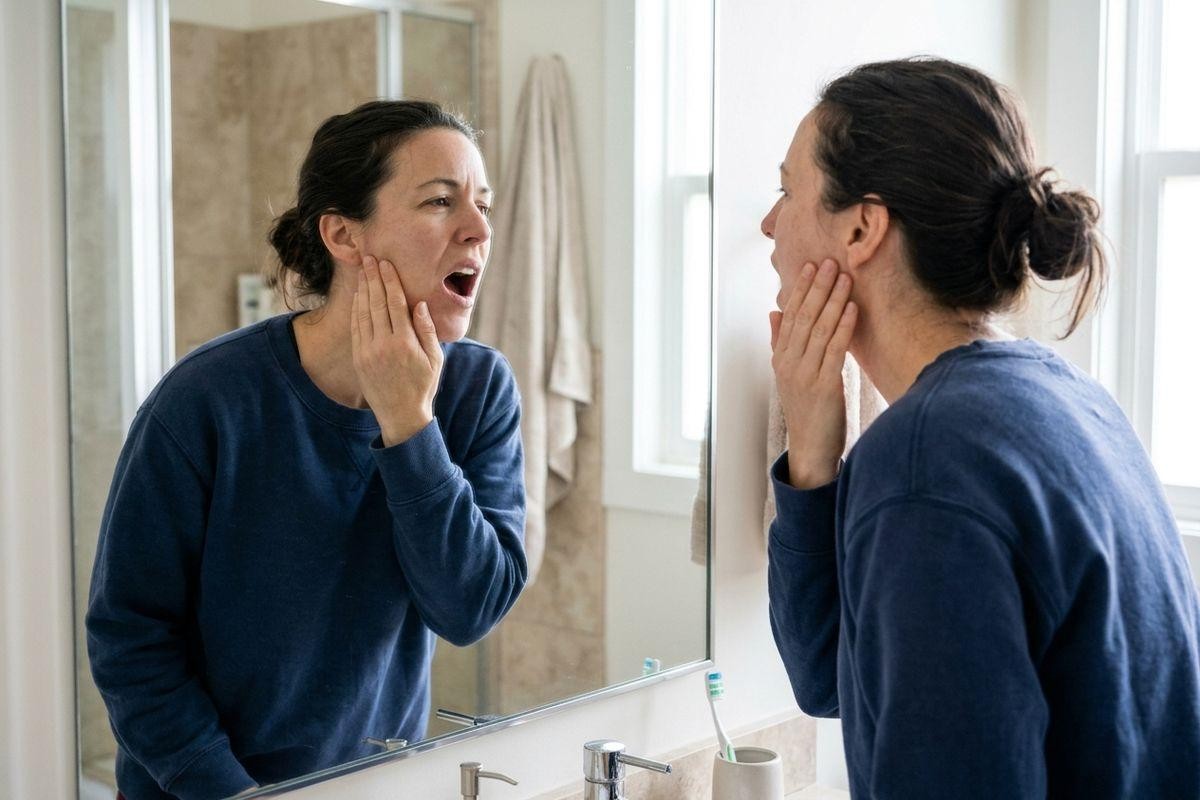
Your jaw, head, and ears can all carry the tension from a night of grinding. The signs are easy to overlook at first because they feel so ordinary.
Look out for these 3 common signs when you wake up:
- Sore or tight jaw muscles when you first wake up.
- A dull, persistent headache that starts near your temples.
- Pain around your ears that has nothing to do with an ear infection.
How Grinding Affects Your Teeth Over Time
The physical wear on your smile tends to build slowly. You might not notice anything until a routine dental visit reveals the wear. Some people start to feel increased tooth sensitivity before they see any visible changes.
Watch for these 3 physical changes to your teeth and jaw:
- Teeth that look flattened, chipped, or feel slightly loose.
- Worn enamel that leaves the inner layers of your teeth more exposed and sensitive.
- A jaw that clicks, pops, or feels stiff when you open your mouth wide.
Reasons You Might Grind Your Teeth
Stress is one of the most common triggers for bruxism. When anxiety or frustration builds up during the day, your jaw can hold onto that tension even after you fall asleep. People who tend to be highly focused, competitive, or driven may also carry more physical tension through their jaw without realizing it.
What you do in the hours before bed also plays a huge role. Caffeine, alcohol, and tobacco interfere with how your muscles relax during sleep, making grinding more likely. Beyond lifestyle habits, bruxism is also connected to sleep apnea, acid reflux, and certain medications. If any of those apply to you, it’s worth mentioning to your dentist at your next visit.
Long-Term Effects on Your Oral Health
Grinding puts a significant amount of force on your teeth night after night. Over time, that adds up.
Tooth damage from grinding can reach a point where crowns or other repair work are needed to address chips, cracks, or worn surfaces. Beyond your teeth, the ongoing muscle strain can cause frequent tension headaches and facial discomfort that affects your day-to-day life. Jaw joint problems are also common, sometimes making it difficult or painful to open your mouth fully.
How a Dentist Can Help
Your dentist can often spot bruxism long before you notice anything yourself. During an exam, they look at wear patterns, check for cracks, and assess whether your jaw muscles feel tender. Routine dental hygiene appointments are one of the most reliable ways to spot these patterns early.
A dentist may recommend a custom night guard. It fits over your teeth and acts as a cushion between your upper and lower jaw, reducing the impact of grinding while you sleep. Splints or positioning devices also help keep your jaw in a more relaxed position through the night.
Additionally, adopt small daily habits to lower your overall tension. Reducing your afternoon caffeine intake or doing simple jaw stretches can make a noticeable difference over time.
Stop The Grind And Protect Your Smile Today
If you’ve been waking up with a sore jaw or suspect grinding is affecting your teeth, Westwood Dental is here to help. Our team of dental professionals can take a closer look, walk you through your options, and help you find the right approach for your smile.
Stop living with the pain and frustration of grinding teeth. Book your visit and find relief today!