
Key Takeaways
- Clean your aligners before putting them back in your mouth, and follow your provider’s instructions for any deeper cleaning.
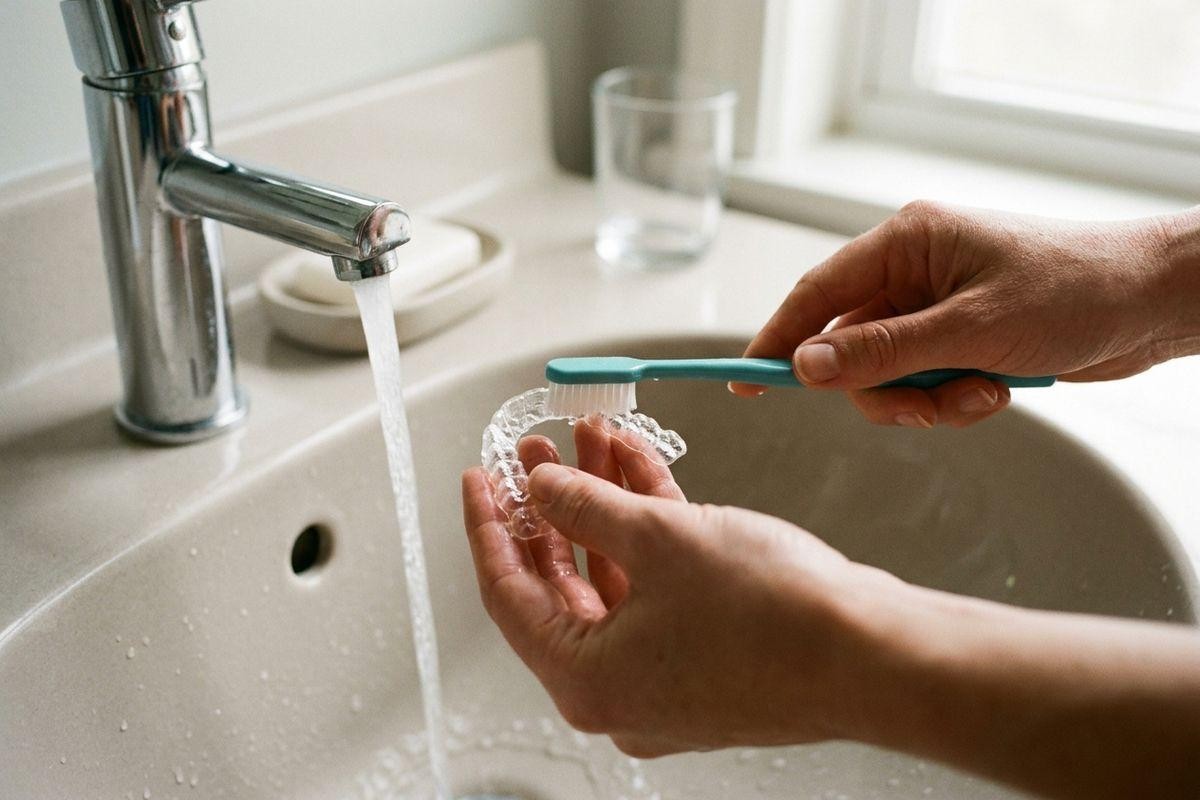
- Use the cleaner recommended by your provider and a soft brush to clean every surface.
- Use an aligner-cleaning product according to its instructions for a deeper clean, and ask your dentist before trying household vinegar or peroxide.
- Follow your provider’s instructions for toothpaste; baking soda and abrasive toothpaste can scratch or dull some aligners. Avoid hot water, which can warp the plastic.
- Drink only water while your trays are in, and rinse them every time you take them out.
Why Daily Aligner Cleanup Matters
You pop your trays out before lunch and notice a cloudy film across the front. Plaque, food bits, and that thin layer of film build up faster than most people expect, and once trays turn cloudy, other people start to notice them. Clean trays also help protect your teeth and gums, something our team at Westwood Dental checks during regular visits. Anything left on the plastic stays against your enamel for hours at a time, so a quick daily scrub does more than keep things looking clear.
A simple routine is to clean your aligners before putting them back in your mouth, rinse them whenever you remove them, and follow the instructions for any deeper soak.
Simple Ways to Clean Your Aligners at Home
Aligner Cleaner & a Soft Brush
This can be a gentle daily option. Use the cleaner recommended by your provider with a soft brush, and clean every surface before rinsing well.
If your provider recommends soap, choose a clear, unscented option so it does not leave a tint or taste.
Soaks for Buildup & Stains
For a deeper clean, use an aligner-cleaning product according to its instructions. Ask your dentist or orthodontic provider before using household vinegar or peroxide, since the wrong concentration can damage your aligners or irritate your mouth.
Rinse the aligners thoroughly after soaking so no cleaning solution remains before you put them back in.
Store-Bought Crystals & Kits
Cleaning crystals and kits made for aligners may use a 15-minute soak, but follow the instructions for the product you choose. They may cost more than household alternatives, but some patients prefer them for travel.
Mistakes to Avoid With Your Trays
A few habits can damage or discolour your aligners. Keep this short list in mind.
- Follow your provider’s instructions for toothpaste; baking soda and abrasive toothpaste can scratch or dull some aligners.
- Hot water can warp the shape of your trays, which changes how they fit.
- Trays left sitting out uncovered can collect dust or be lost.
When your aligners aren’t in your mouth, they belong in their case. That habit helps reduce the risk of cracks and loss.
How to Prevent Yellow Stains on Your Aligners
Habits That Cause Stains
Coffee, tea, and coloured drinks can stain clear plastic if you drink them while your trays are in. Snacking with aligners in can also trap food against your teeth.

Small Routines That Help
A few small habits can help:
- Rinse your trays under cool water each time you take them out.
- Brush your teeth after meals before the trays go back in, and keep water as the only drink while you’re wearing them.
- Give your aligners a morning rinse to clear the film that settles overnight.
These habits can help reduce cloudiness during treatment.
Common Questions About Aligner Care
How Often Should You Clean Them?
Clean your aligners before putting them back in your mouth, and follow your provider’s instructions for any deeper cleaning.
Do Retainers Need a Different Routine?
For clear retainers, a soft brush and the cleaner recommended by your dentist may be appropriate. Other retainer types may need different care, so follow your provider’s instructions.
When to Call a Dentist
Some problems need a dental professional to assess them. Reach out if you notice any of the following.
- A cracked or warped tray, or one that no longer fits the way it used to.
- Stains that won’t budge after soaking and brushing.
- Gum irritation along the edges of your aligners.
Small issues are easier to sort out early, and a quick check can save you from wearing a tray that isn’t tracking properly.
Keep Your Treatment on Track
Keeping your trays clean can support fresher breath and a comfortable fit. Our friendly team at Westwood Dental can walk you through a routine that suits your schedule and check how your aligners are fitting.
Call to book your next visit, and bring your trays along so the team can answer your questions.