

At Westwood Dental, we often hear from patients dealing with a sore jaw when they wake up, a clicking sound when they open wide, or a dull ache that seems to travel into the ears or neck. These are common signs of TMJ trouble.
Whether TMJ pain goes away on its own depends on what’s causing it and how long it’s been around. Some cases settle down with a bit of rest and self-care. Others need a closer look from your dental team.
Here are seven relief options worth knowing:
- At-home care
- Custom night guards
- Oral appliance options
- Physical therapy
- Orthodontic treatment
- Botox, if appropriate
- Professional jaw exam
What Causes TMJ Pain?
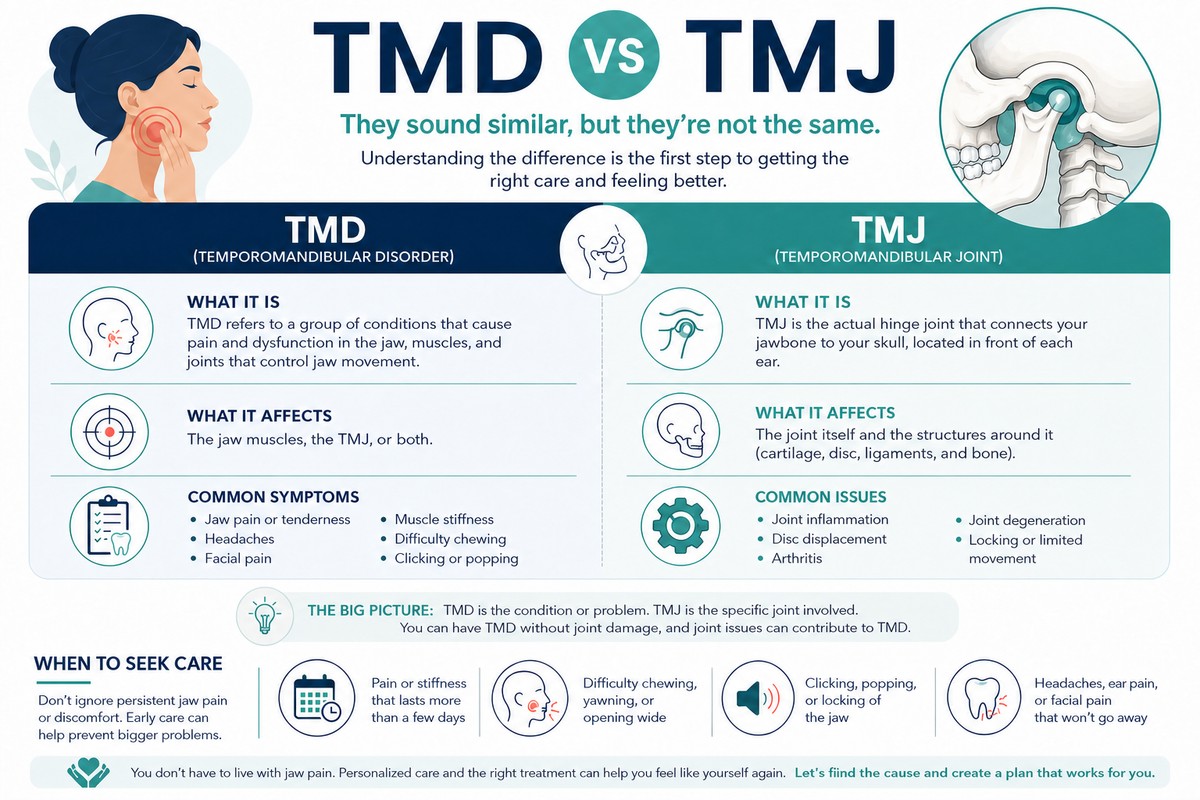
TMJ stands for the temporomandibular joint, the hinge connecting your jaw to your skull. When it’s irritated or out of balance, the effects can show up in surprising places.
TMJ discomfort can show up in a few different ways:
- Jaw pain, clicking, or popping when you chew or open your mouth wide
- Headaches, ear pain, or tension that spreads into your neck and shoulders
- Trouble opening or closing your mouth fully, especially first thing in the morning
Does TMJ Pain Go Away on Its Own?
It’s one of the first questions people ask once jaw pain sets in, and the honest answer is: it depends.
When TMJ Might Resolve Without Treatment
Some cases of TMJ discomfort do ease up without professional care. If your symptoms started after a stressful week, a minor jaw injury, or a short bout of teeth grinding, they may settle down once the trigger passes. Short-term muscle tension in the jaw often responds well to rest and simple self-care.
When to See a Dentist
Talk to your dentist if jaw discomfort sticks around for several weeks or makes it hard to eat, sleep, or get through your day. The same goes for symptoms that keep coming back after they’ve settled, or that seem to get worse over time instead of better.
7 TMJ Relief Options Worth Knowing
There’s no single fix that works for everyone. The right approach depends on your symptoms, how long they’ve lasted, and what’s driving them.
1. Try At-Home Care First
Hold a warm compress against your jaw for 10 to 15 minutes to loosen tight muscles, or use a cold pack to take the edge off sharper pain and swelling.
Switch to softer foods for a few days to give your jaw a break, and add in stress-relief habits like gentle stretching, deep breathing, or meditation if tension seems to be part of the picture.
2. Wear a Custom Night Guard
Wear a custom night guard to protect your teeth from grinding and ease the pressure your jaw carries overnight.
3. Ask About Oral Appliance Options
Ask about oral appliance options. Depending on what is causing your symptoms, your dentist may recommend a custom night guard or another removable appliance to help reduce pressure on your jaw.
4. Add Physical Therapy or Jaw Exercises
Work with a physical therapist or try guided jaw exercises to strengthen the muscles around the joint and improve how it moves.
5. Consider Orthodontic Treatment
Orthodontic treatment may be worth discussing if your bite or tooth alignment is adding strain to your jaw. Westwood Dental offers Invisalign, and your dentist can let you know whether aligners or another approach makes sense for your situation.
6. Ask Whether Botox Is Appropriate
In some cases, Botox may be discussed when overactive jaw muscles are a major part of the problem. Your dentist can let you know whether this is appropriate for your symptoms or whether referral-based care makes more sense.
7. Book a Professional Jaw Exam
Book a jaw exam so your dental team can get a clear picture of where your discomfort is coming from. We’ll check how your jaw moves, review your bite, and ask about your symptoms.
From there, your dentist builds a treatment plan around your specific situation. We use tools like digital and panoramic X-rays to get a detailed view of your jaw joint and surrounding structures to support an accurate assessment.
How Long Does TMJ Relief Take?
There’s no single timeline, but a few general patterns can give you an idea of what to expect.
At-home care like soft foods and heat or cold therapy can start easing discomfort within a few days. Night guards and other oral appliances may take a few weeks of consistent use to feel noticeable. If Botox is appropriate, your dentist can explain what to expect based on your situation.
The more complex the underlying cause, the longer the process tends to take. Many TMJ symptoms are manageable at home, but persistent or worsening symptoms are worth a professional evaluation.
Don’t Wait Out a Sore Jaw
Addressing TMJ symptoms early can help prevent them from turning into a bigger problem down the road.
Worn teeth, bite issues, and joint discomfort are often connected. Since your dentist looks at jaw health and dental health together, they’re well-positioned to address all of it in one visit.
Ready to Get Your Jaw Some Relief?
Jaw discomfort doesn’t have to run your day. Book an appointment and get a clear picture of what’s going on, plus a plan built around you.
Westwood Dental has served families in the area for over 30 years from our location in Westwood Mall. Reach out today and take the first step toward a more comfortable bite.