

You might notice that your teeth look a little longer than they used to, or maybe you feel a sharp twinge of sensitivity when you enjoy a cold drink. These experiences can be unsettling and often point toward receding gums, a condition where the gum tissue around your teeth pulls back or wears away.
While receded gum tissue doesn’t grow back on its own, treatments can stop or slow the progression and help manage your symptoms. At Westwood Dental, our team can help you understand the signs and treatment options available to help with receding gums.
What Are Receding Gums & What Are the Signs?
Your gums form a protective seal around the base of your teeth. When this tissue begins to pull away, it exposes more of the tooth and sometimes even the root. This condition, a form of gum disease, can leave your teeth vulnerable to sensitivity and other dental health issues. Look for these common signs.
- Gums that appear to be pulling back from your teeth
- Teeth that look longer than they did before
- Exposed and sensitive tooth roots
A Note on Gum Tissue
It’s important to know that gum tissue doesn’t regenerate once it’s lost. The goal of treatment is not to regrow the gums, but to halt the process of recession. A proper treatment plan can prevent the issue from getting worse while also helping to protect your exposed teeth.
Common Causes of Gum Recession
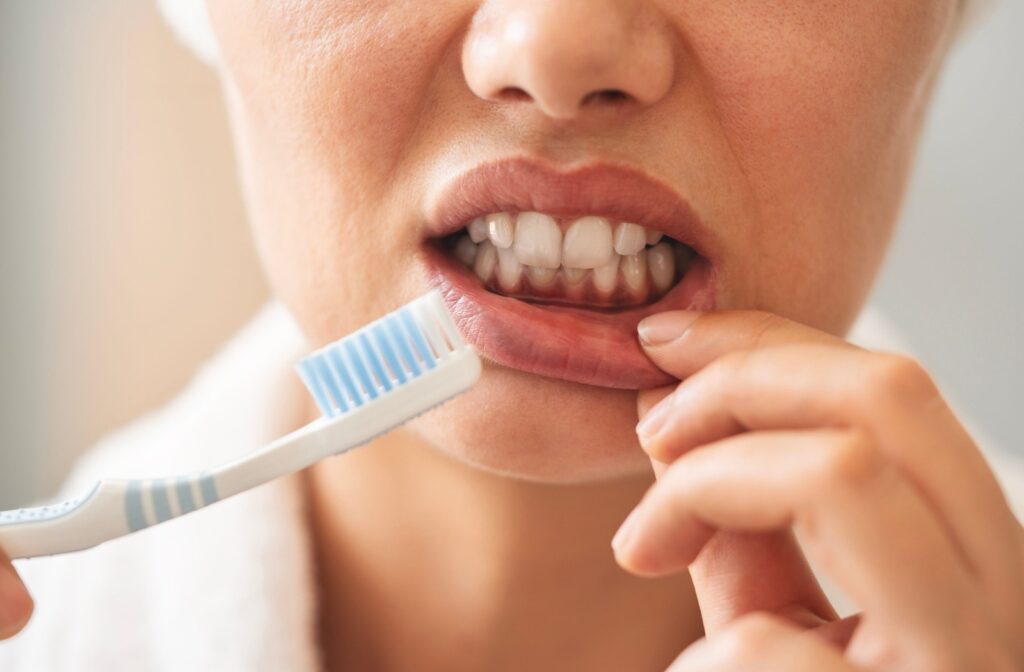
Several factors can contribute to your gums receding. Sometimes it’s a combination of things, from daily habits to your genetic makeup. Identifying the cause can help you and your dental team create a plan to address it directly.
- Brushing your teeth too hard or with a firm-bristled toothbrush
- The presence of periodontal (gum) disease
- Genetics or hormonal fluctuations
At-Home Care for Healthier Gums
Your daily routine plays a significant role in the health of your gums. Adopting gentle habits can make a big difference in preventing further recession and managing any discomfort you already feel. Small changes can lead to noticeable improvements in your oral health.
Gentle Oral Hygiene Habits
Think of your gums as delicate fabric that needs careful handling. Using a soft-bristled toothbrush helps clean your teeth effectively without causing damage. Brush gently for two minutes, twice a day, and follow proper flossing techniques daily to remove plaque from between your teeth where a brush can’t reach.
Manage Tooth Sensitivity
Exposed tooth roots are a common source of sensitivity. Desensitizing toothpaste can help block the tiny channels in your teeth that lead to exposed nerve endings. Regular dental hygiene appointments can provide professional guidance and care, and you may also be able to find relief by avoiding foods and drinks that trigger sensitivity.
Professional Gum Recession Treatments
When at-home care isn’t enough, professional treatments can offer more direct solutions. A dental professional can assess your situation and recommend a personalized approach to protect your teeth and improve your comfort.
Non-Surgical Options
For mild cases, a deep cleaning—also known as scaling and root planing—can help. This procedure removes plaque and tartar from below the gum line, helping your gums reattach to the teeth. Dental bonding can also be used to cover an exposed root, which reduces sensitivity and improves the tooth’s appearance.
Gum Graft Procedures
In cases of more significant recession, an oral surgery procedure like a gum graft may be an option. This procedure involves using tissue to cover the exposed root, which provides a long-term solution to protect the tooth from decay and sensitivity. A dentist in Malton, ON, can discuss if this is a suitable treatment for you.
What to Expect After Treatment
Your recovery will depend on the type of treatment you receive. For non-surgical options, you can typically return to your normal routine right away. However, a surgical procedure like a gum graft requires a bit more time for healing.
- Recovery from a gum graft procedure usually takes about two weeks.
- Your dental team will provide you with specific post-procedure instructions.
- Follow-up visits are scheduled to monitor your healing progress.
Proactive steps can help you manage gum recession and protect your smile for the future. If you have concerns about your gums, our team at Westwood Dental is ready to listen. Schedule a consultation to explore a personalized care plan that fits your needs.